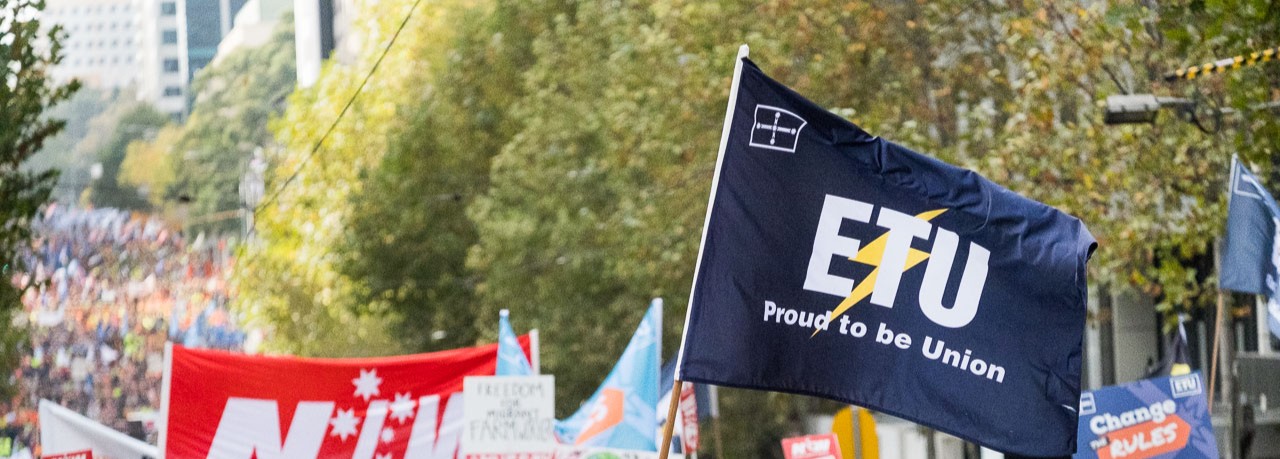
A coalition of the CEPU and ETU, the CFMEU and the MEU have won a legal challenge to ensure better rights of delegates in workplaces.
The Fair Work Commission tried to reduce the rights of delegates, when they added definitions and terms about delegates rights into modern awards that weren’t accurate to legislation, and stopped workers from accessing their full rights.
We made it clear that that wasn’t good enough.
The decision of the court proceedings, passed down in December 2025, stated that the previous delegates rights term, as included by the Fair Work Commission, was too restrictive, and went beyond the Fair Work Commission’s powers.
The previous definition was inserted into all modern awards, operating from the 1st of July 2024. It came from the Fair Work Legislation Amendment 2023 (Closing Loopholes), which introduced rights for workplace delegates in the Fair Work Act, and for inclusion in modern awards.
The unions argued that the previous terms set by the Fair Work Commission, limited workplace delegates in three different ways.
Firstly, it limited delegates to communicating with people employed by the same employer, not just employed at the same workplace. For workplaces with labour hire and contractual employment, people aren’t always employed by the same employer, and it would have stopped delegates being able to talk to these people, limiting their ability to organise and fight for better conditions and pay.
Secondly, it limited the purpose of communications, stating they had to be about representing industrial interests, and not just relating to industrial interests.
Finally, it imposed restrictions on delegates using their rights, that were not authorised by the Fair Work Act, including saying that delegates had to still act in their employers’ interests. Given that delegates are meant to act in employees’ interests, which can sometimes mean working against the employers’ interests, it created restrictions on delegates doing their jobs properly.
The full Federal Courts ruling agreed with our arguments, stating that the Fair Work Commission had acted beyond its power and failed to meet its obligations.
The full court instructed that the Fair Work Commission had to remove the terms that failed to meet its obligations and re-write them. They have since done so and have also updated not just the nine awards that were in the court case, but the remaining 146 awards that also had the same flawed definition.
This win goes beyond just the technical language- it means that delegates can do their jobs in advocating for better conditions and pay. We were never going to accept a flawed definition that left delegates worse off and are glad we were successful in forcing the Fair Work Commission to do better.