
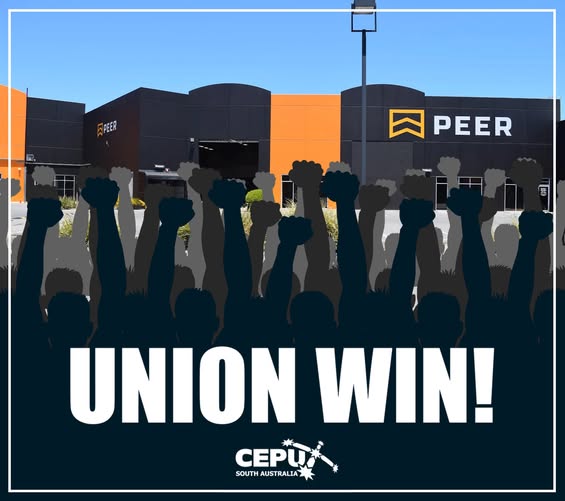
PEER apprentices in South Australia sent a clear and powerful message: they deserve better.
In a decisive result, apprentices voted down the company’s proposed enterprise agreement, a deal that would have left them stuck on award wages, plus a nominal $10 per week “PEER allowance”, for the next four years.
Often bosses make the mistake to think apprentices will just accept bad wages and conditions, as they are just at the start of their career and have less experience in the trades. These apprentices showed, decisively, this not the case. When workers unionise and fight collectively, they are a powerful force – they win!
The vote came with some complexity. The CEPU SA Branch is currently pursuing a multi-employer bargaining agreement, to ensure that apprentices across the board at different GTOs (Group Training Organisations) would all receive the same benefits and increased pay. Discussions were being held about whether that would be through a single interest bargaining stream or supported bargaining stream, however before it could be progressed, PEER pushed ahead and sent out a notice of employee representational rights, effectively beginning the enterprise agreement process for a single employer agreement.
The CEPU took PEER to the Fair Work Commission over this, arguing that PEER was attempting to rush the process and avoid a potential multi-employer agreement, and that PEER had previously agreed to dates for multi-employer negotiations, and this undermines that process. The FWC ultimately ruled in PEER’s favour, however the CEPU lodged an appeal.
While these court proceedings have been occurring, the deal that PEER offered, the award rate plus $10 per week, went to a vote. Through the work that had already been done by organisers in trying to set up multi-employer bargaining streams, apprentices were aware of the benefits of multi-employer EBAs, and could see clearly that this deal was not good enough for them.
PEER thought they could rush and push through another bad EBA and that apprentices were likely to vote it up. Even with a fragmented employment model, ETU members and workers can organize, stand together and demand better.